A gift of clothing-rental time was not a gift of the clothes themselves. The former Box service’s gift covered a subscription period; buying a garment was a separate transaction, and the subscription could renew after the gift ran out. Those distinctions explain much of the small print scattered across its old help centre.
This independent reconstruction compares help pages captured between February and April 2024 with a 2022 invitation page and an older policy effective in 2019. It documents the former operator’s published gift and referral arrangements. Gift purchase, code redemption, account credit and customer support are not services provided by this journal.
Three gift lengths, with historical prices
The gift-options answer described three plans. The price page captured on March 3, 2024 listed one month at $79, two months at $135 and three months at $200.
- One month: $79. This was the shortest gift period listed.
- Two months: $135. Compared with two $79 months, the listed saving was $23: $158 minus $135.
- Three months: $200. Compared with three $79 months, the listed saving was $37: $237 minus $200.
The listed savings use repeated one-month gifts as the comparison: they are arithmetic differences, not measured savings for every recipient. The brief gift-price answer did not explain tax treatment.
The purchaser answer said anyone could buy a gift through the site, whereas the redemption answer specified a recipient living in the United States. Buying and redeeming had different descriptions. The gift answer did not resolve every geographic edge case, so it should not be silently expanded from the service’s separate shipping rules.
Sending an email was one stage; redeeming was another
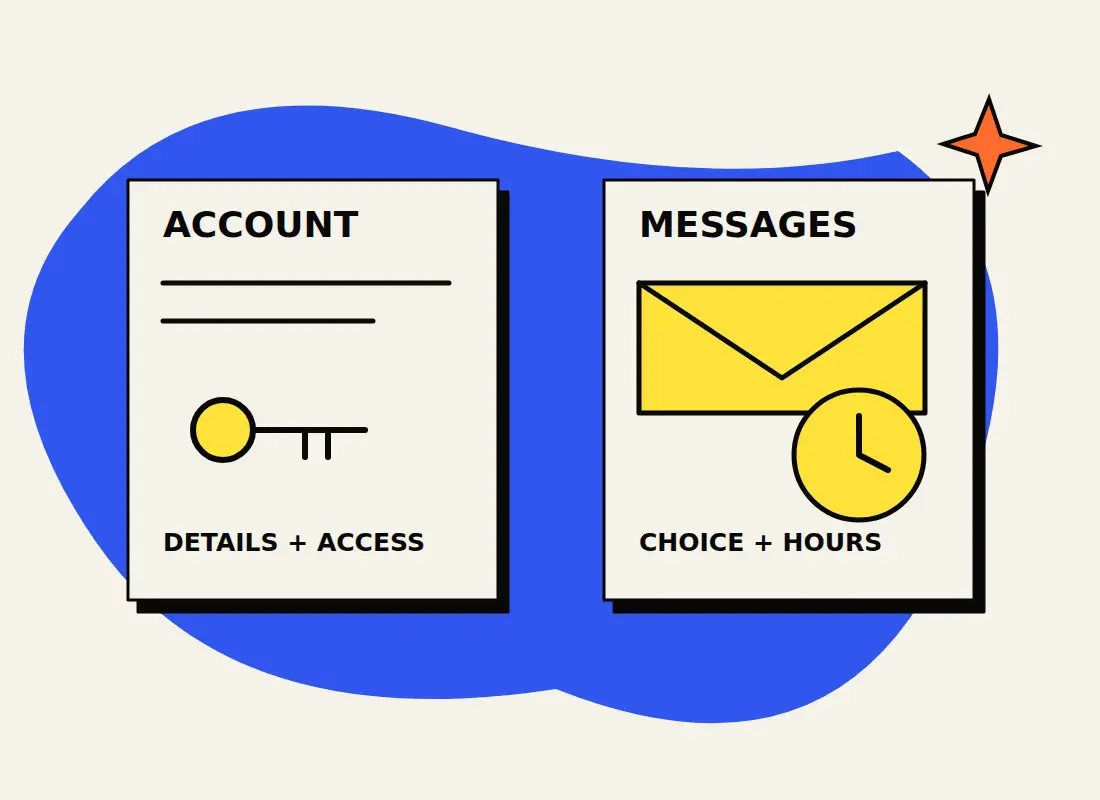
The purchase instructions began with Give a Gift, followed by a plan, the buyer’s and recipient’s details, a chosen delivery date and confirmation. The overview described an email containing the recipient’s redemption instructions. These were the former interface’s steps, not a working checkout reconstructed here.
The redemption answer described a unique emailed code and a link through which the gift would be applied. For someone without a subscription, it started one; for an existing member, it applied to the next month or months of service. That distinction prevents an easy mistake: the send date was not necessarily the first day of a new rental period for every recipient.
The gift-purchase payment answer listed an existing member’s stored method, Visa, Mastercard, Discover, American Express, debit and prepaid cards, Apple Pay and Google Pay. Those were described as methods for buying a gift. They did not establish that every method could also fund recurring membership payments, or that a particular attempted purchase succeeded.
Why a recipient still needed a card
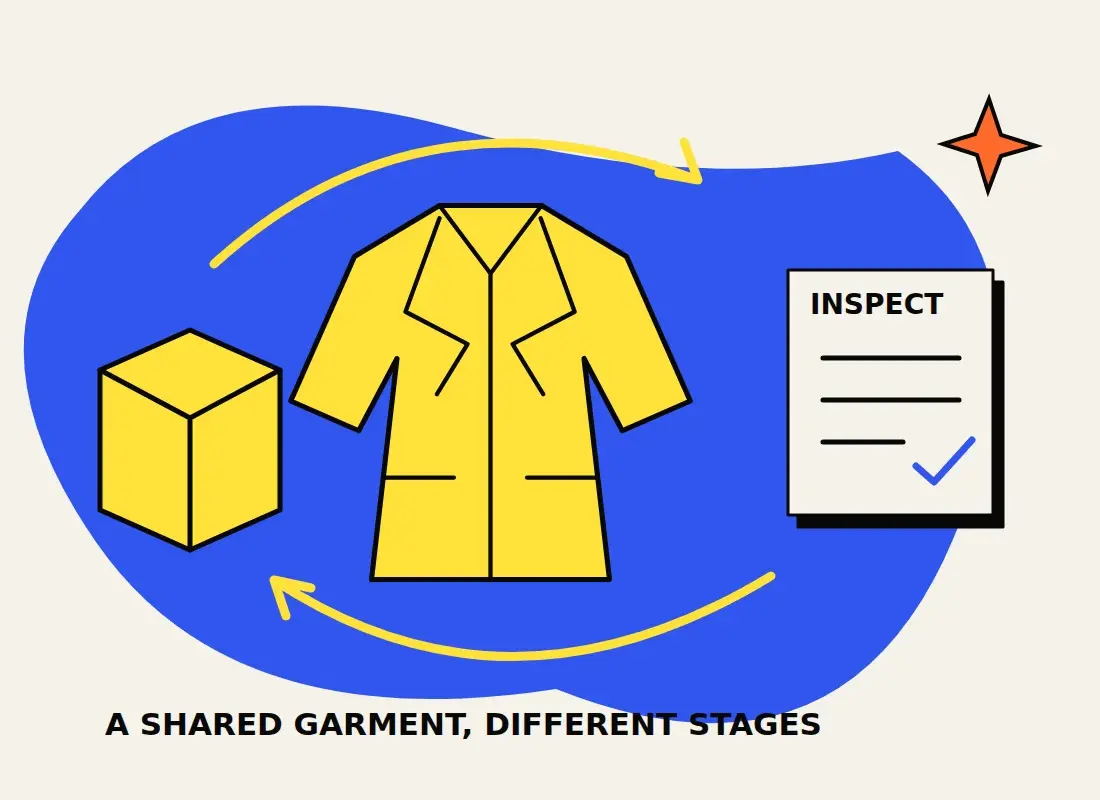
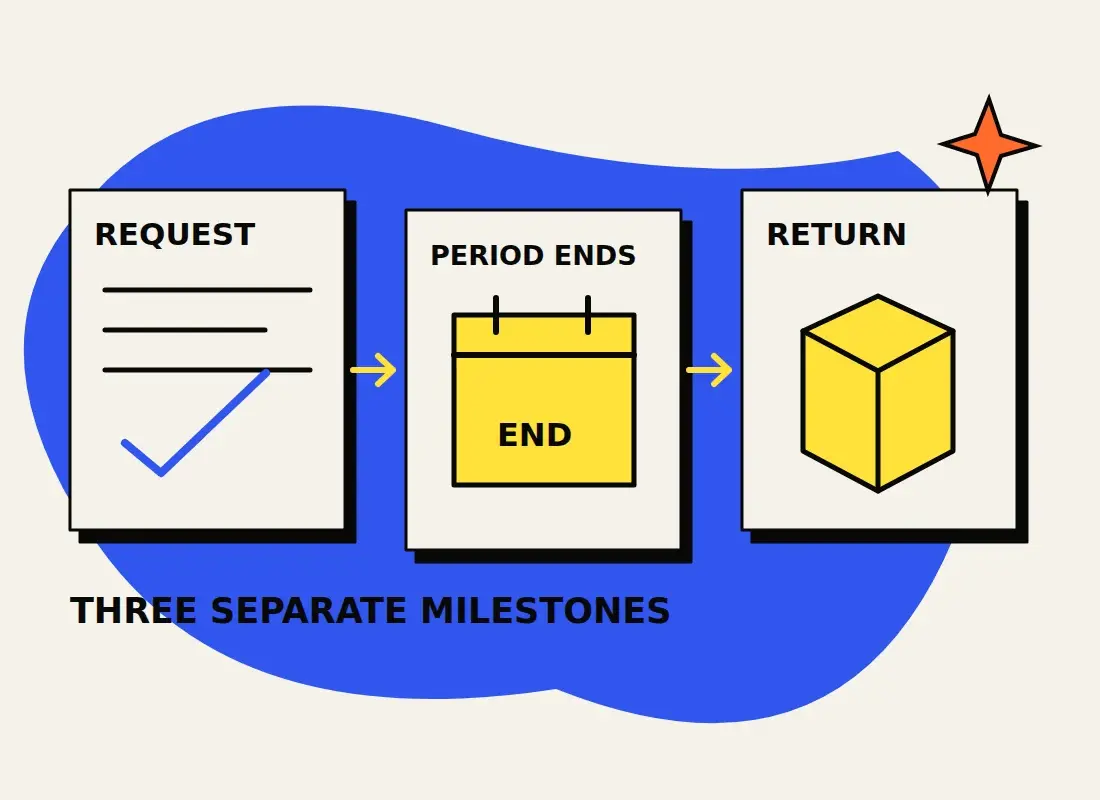
The recipient-card answer required a valid credit card to redeem a gift. It said a charge would not occur until the gift period ended or the recipient chose to purchase a rented garment. The separate garment-purchase answer was clear that the gift itself applied only to membership, not to buying an item.
Imagine a fictional recipient who receives a two-month gift and likes a jacket in the first box. The subscription gift and the decision to buy that jacket remain separate. The gift does not turn into a $135 clothing voucher. The Try-Then-Buy reconstruction explains the former item-price and confirmation step.
The gift-ending answer said the subscription would automatically renew at the end of the full gift period unless the account was cancelled beforehand. A finite gift therefore did not imply an automatically closing account.
There is an unresolved difference in the instructions. The gift-specific cancellation answer directed recipients to the former email or phone support team, with Monday–Friday hours of 9 a.m. to 5 p.m. Eastern Time. The general subscription answer described online cancellation links. Our membership reconstruction retains that second route. The capture dates do not tell us which instruction superseded the other or whether every gift account exposed the same controls.
Two email answers that did not fully answer their titles
The page about knowing whether a gift was delivered actually promised an email confirmation when the recipient redeemed it. Redemption is a later action than an email arriving. The absence of that confirmation alone would not prove the message had failed to arrive.
For a missing gift email, another answer referred the purchaser to the former support team. It did not document a self-service resend button. That omission matters if someone is trying to reconstruct the interface rather than just its overall purpose.
The answer about an error in the recipient’s or purchaser’s email had a similar mismatch. Its body described editing your own email under My Account, Personal Information and Account Summary. It did not establish how to change the recipient of an already issued gift. Treating a profile-email edit as a proven fix for that separate problem would go beyond the surviving instructions.
A referral credit had a different trigger from a gift
The Refer a Friend explanation described personal links shared through email or social channels. The friend had to follow that link to sign up and become a verified member for 30 days before the referrer received $10 in account credit. The missing-reward answer added an important qualification: the friend had to be a new member.
The timing answer captured on February 22 placed the email notification on the day after that 30-day membership condition was met. It was not a reward promised the day after an invitation was sent. Those short help answers leave several credit restrictions unstated; the older policy below supplies more detail without proving which terms applied in 2024.
Suppose, in a hypothetical example, a friend receives an invitation but waits several weeks before joining through its link. Counting 30 days from the invitation would use the wrong starting point: the source ties the interval to membership. If the friend never joins, the invitation alone does not satisfy the stated conditions.
The referral-limit answer set no numerical cap on the number of friends referred. The communications answer said messages would relate to the referral unless the friend separately opted into promotional emails. These were the operator’s stated arrangements, not an independent audit of its messaging or reward system. The missing-reward answer suggested checking spam for an absent invitation and contacting the former support team about a qualifying credit that had not appeared.
Two sides of the referral, in three dated records
A joining page captured on June 30, 2022 advertised $30 off the new member’s first month. That was the recipient’s discount. The $10 in the 2024 help answer above was the referrer’s reward. Different people, different triggers and different capture years: the two figures do not prove a single offer available on one date.
The 2022 small print required the recipient to use the invitation link and make a purchase. It tied the referrer’s membership-fee credit to the friend remaining a member for 30 days without cancelling during that interval. It also gave the invitation and its discount a one-year expiry from sending, while reserving the operator’s ability to change or end the discount. That wording did not give an already earned credit a one-year life.
The fuller referral policy captured on September 22, 2020 carries its own effective date: November 21, 2019. Its eligibility section described referred participants as US residents aged at least 18 who had never been members. It excluded self-referrals and referrals of former members using another email or alias, and said cancelling membership ended participation eligibility.
The policy described credits as nontransferable and without cash value. It listed sales tax, shipping, donations, gift memberships and products among the uses excluded from credit redemption. Those restrictions help explain why a referral credit was not a general shopping voucher. They are the older document’s stated terms; this archive does not establish which version governed an individual account in 2024.
There are two further distinctions in the small print. First, the older policy reserved a right to limit credits applied to an account. The later FAQ’s lack of a cap on friends referred measures something different: people invited versus credits applied. Second, the policy’s marketing clause addressed referral-program participants and described email opt-out; the later help answer discussed messages sent to an invited friend. Date and audience both matter before treating those passages as equivalent promises.
The older policy also contains an unexplained “Scotch Select” heading in its credit section. That is an inconsistency in the source, not evidence of a relationship between brands. Its opening promises notice of program changes, while later clauses reserve changes without prior notice. This reconstruction preserves those limits instead of deciding which clause prevailed. The useful reading is to follow each benefit from the person receiving it to the qualifying event and the particular dated terms.
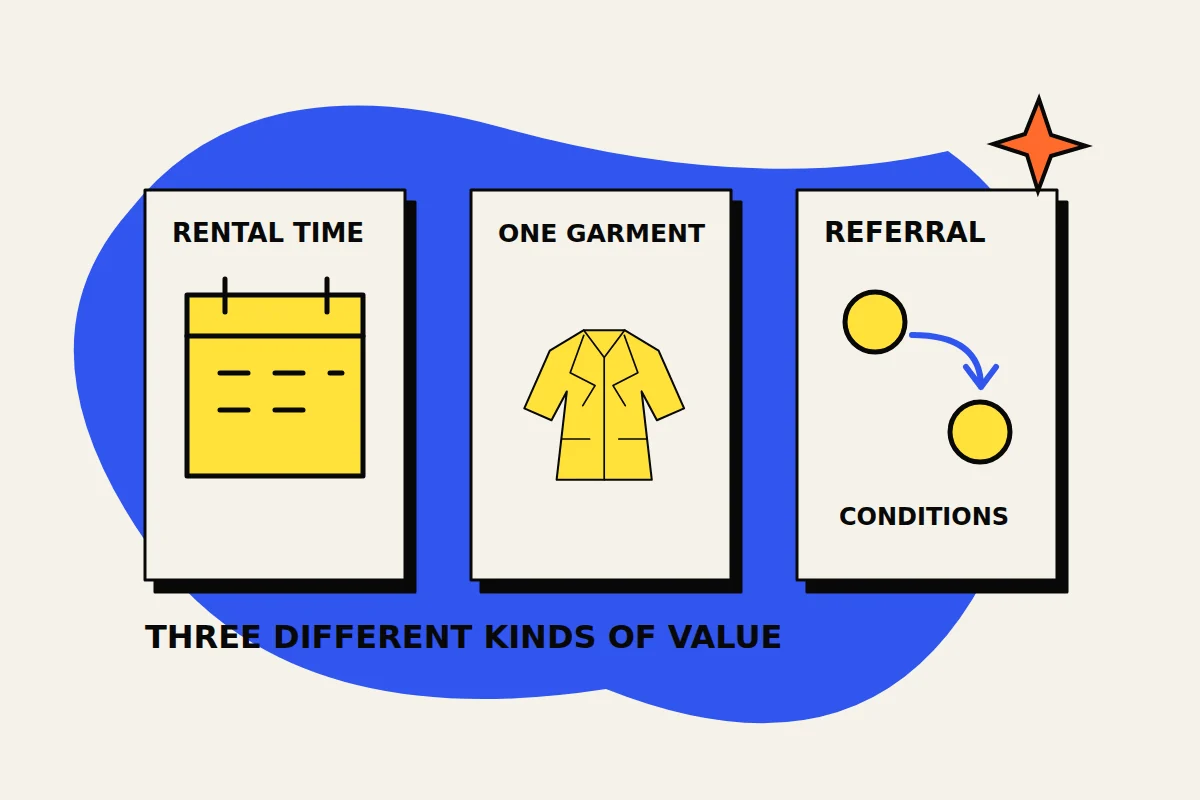
The archive describes three different kinds of value: time on a subscription, payment for a specific garment and credit earned through a qualifying referral. Keeping each attached to its own trigger is more useful than calling all three a gift card. It also leaves the limitations visible: no retrieved help paragraph proves that a particular email arrived, a code was redeemed or a credit was actually issued.